The global demand for seafood continues to rise exponentially, driven by increasing population growth and shifting dietary preferences toward protein-rich foods. Traditional fishing methods face mounting pressure from overfished stocks and environmental concerns, prompting entrepreneurs and investors to explore alternative solutions. Aquaculture startups are revolutionizing the seafood industry by establishing farms in unconventional locations, leveraging cutting-edge technology to produce sustainable seafood where it was previously thought impossible.
The Rise of Urban and Indoor Aquaculture Facilities
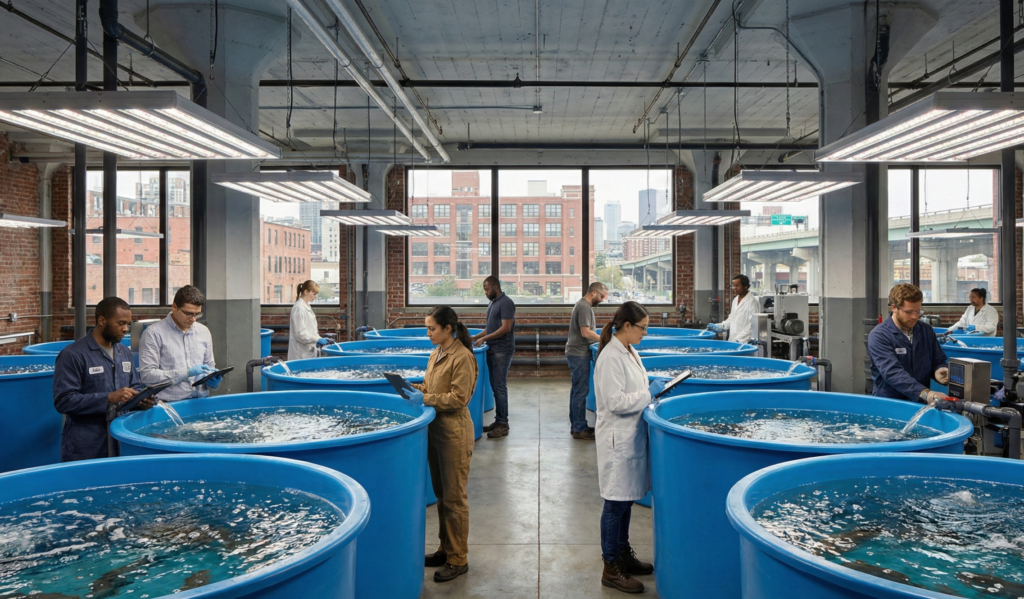
One of the most significant trends in aquaculture innovation involves relocating fish farms from coastal areas to urban centers and indoor facilities. These innovative startups are capitalizing on vertical farming technology and recirculating aquaculture systems (RAS) to create controlled environments that maximize production efficiency while minimizing environmental impact.
Indoor aquaculture facilities offer numerous advantages over traditional ocean-based operations. These include:
- Precise control over water temperature, quality, and nutrient levels
- Elimination of disease transmission between wild and farmed populations
- Significant reduction in antibiotic and pesticide usage
- Year-round production independent of seasonal fluctuations
- Proximity to urban markets, reducing transportation costs and carbon footprint
- Reduced water consumption through advanced recycling systems
By positioning farms near population centers, startups can dramatically decrease supply chain complexity while delivering fresher products to consumers within hours of harvest rather than days.
Desert and Arid Region Aquaculture
Perhaps the most unexpected frontier for aquaculture expansion involves establishing farms in desert and arid climates. Innovative startups are utilizing advanced water management technologies and alternative water sources—including treated wastewater and desalinated seawater—to cultivate seafood in regions previously considered unsuitable for aquaculture.
Companies operating in these challenging environments employ integrated multi-trophic systems that maximize resource efficiency. These operations demonstrate that geography need not be a limiting factor in food production, opening opportunities for sustainable employment and food security in water-scarce regions.
High-Altitude and Cold-Water Aquaculture
Startups are also exploring high-altitude locations and naturally cold-water regions previously overlooked by the aquaculture industry. Mountain regions with pristine water sources and consistent cold temperatures provide ideal conditions for cold-water species such as salmon and trout without the energy costs associated with temperature regulation.
These operations benefit from reduced infrastructure requirements and minimal need for temperature control systems, making them economically attractive while maintaining optimal growth conditions for cold-water species.
Technological Innovations Enabling New Locations
The expansion of aquaculture into unexpected places is fundamentally enabled by technological advancement. Several key innovations have made this transformation possible:
- Recirculating Aquaculture Systems (RAS): Advanced filtration and water treatment technologies allow farms to operate with minimal water exchange, reducing environmental impact and enabling operation in diverse locations.
- Artificial Intelligence and IoT Sensors: Real-time monitoring systems optimize feeding, water quality, and disease detection, significantly improving yields and reducing losses.
- Renewable Energy Integration: Solar, wind, and geothermal energy sources power increasingly sustainable operations in previously inaccessible regions.
- Gene Technology: Selective breeding and genetic improvements produce faster-growing, disease-resistant species suitable for diverse environmental conditions.
- Automation and Robotics: Automated systems reduce labor costs and improve operational consistency in remote locations.
Economic and Environmental Benefits
Aquaculture startups operating in unexpected locations generate substantial economic and environmental advantages for their regions and the broader industry.
Economic Impact: These ventures create employment opportunities in rural and economically disadvantaged areas. By establishing operations near secondary markets and in underutilized regions, startups stimulate local economic development and reduce dependency on traditional resource extraction industries.
Environmental Sustainability: Land-based and controlled-environment facilities eliminate overfishing pressures on wild populations and reduce marine ecosystem disruption. The elimination of escaped farmed fish into wild habitats prevents genetic contamination and disease transmission to native species.
Furthermore, advanced aquaculture operations reduce greenhouse gas emissions through localized production, minimizing transportation requirements and refrigeration needs compared to traditionally sourced seafood.
Challenges and Solutions in Emerging Markets
Despite significant promise, aquaculture startups in unconventional locations face considerable challenges that require innovative solutions.
Regulatory Obstacles: Many regions lack established frameworks for aquaculture licensing and permitting. Startups must navigate complex regulatory environments while advocating for supportive policies that encourage responsible innovation.
Capital Requirements: Establishing technologically advanced farms demands substantial initial investment. Startups are addressing this through strategic partnerships, grant funding, and impact-focused investment vehicles.
Technical Expertise: Operating sophisticated aquaculture systems requires specialized knowledge. Companies are investing in employee training and developing standardized operational protocols to ensure consistency across locations.
Market Education: Consumers and restaurants must understand the quality and sustainability advantages of farm-raised seafood from these operations. Startups are implementing transparent labeling and traceability systems to build consumer confidence.
Investment Trends and Market Growth
The aquaculture technology sector has attracted unprecedented investment from venture capital firms, impact investors, and multinational corporations. This capital influx reflects confidence in the sector’s potential to address global food security challenges while generating attractive financial returns.
Industry analysts project that land-based and indoor aquaculture will capture an increasingly significant market share as production costs decline and consumer acceptance grows. Early-stage startups demonstrating operational viability are attracting follow-on funding rounds and acquisition interest from established agricultural and food production companies.