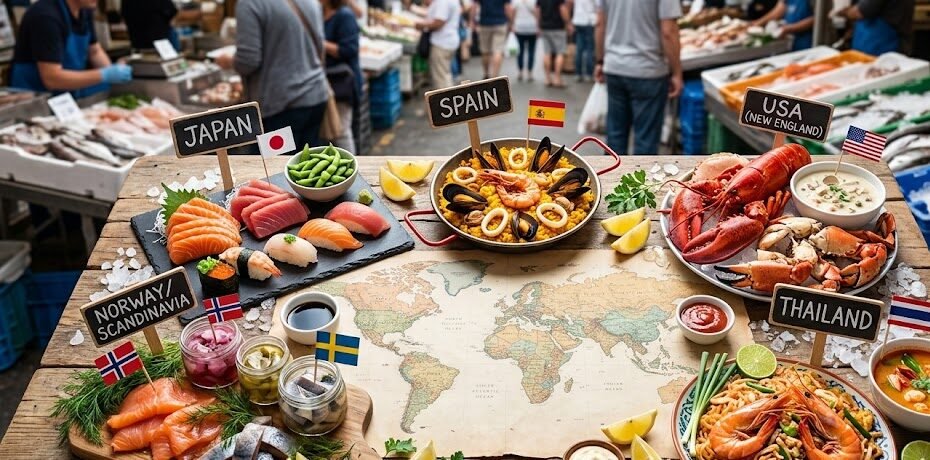
Seafood represents one of the world’s most diverse and nutrient-rich food sources, with different regions cultivating unique species and culinary traditions. Understanding the seafood offerings by country provides valuable insight into global fishing practices, local cuisines, and sustainable marine resources. This comprehensive guide explores the distinctive fish and shellfish varieties found across the world’s major seafood-producing nations.
Asia-Pacific Region
Japan
Japan stands as a global leader in seafood consumption and quality. The nation’s seafood heritage encompasses an extensive range of species, including tuna, salmon, mackerel, and sea bream. Japanese waters produce exceptional quality fish prized for sushi and sashimi preparation. Shellfish varieties such as scallops, oysters, and sea urchins are also central to Japanese cuisine. The country’s meticulous handling and preservation methods have established international standards for seafood quality.
Thailand
Thailand’s seafood industry thrives along its extensive coastlines, producing shrimp, crab, squid, and various white fish species. Thai cuisine heavily features seafood in traditional dishes, from tom yum to curry preparations. The country’s warm waters support abundant shellfish populations, particularly farmed shrimp, which represents a significant export commodity. Fresh and dried seafood forms the backbone of Thai culinary tradition.
Vietnam
Vietnam’s seafood production ranks among the world’s highest, with catfish, shrimp, and crab as primary exports. The Mekong Delta region supports intensive aquaculture operations producing high volumes of farmed fish. Vietnamese waters also yield squid, mackerel, and grouper. The nation’s seafood processing industry has become globally significant, supplying markets worldwide.
Australia
Australia’s vast oceanic territories produce premium seafood varieties including barramundi, flathead, and snapper. The country is renowned for wild-caught species from both Atlantic and Pacific waters. Australian lobster, particularly rock lobster, commands premium prices internationally. Oyster farming, particularly in New South Wales, produces world-class bivalves. The nation’s strict fisheries management ensures sustainable seafood production.
European Seafood Traditions
Norway
Norway maintains its position as a leading seafood exporter, with salmon aquaculture dominating the industry. The country’s cold waters produce exceptional Atlantic salmon, cod, halibut, and haddock. Norwegian fjords support sustainable fish farming practices that have become industry benchmarks. Wild-caught species, including Arctic char and various white fish, also represent important segments of Norwegian seafood exports.
Iceland
Iceland’s fisheries depend on the nutrient-rich North Atlantic waters, producing cod, haddock, and various flatfish species. The nation’s seafood tradition emphasizes sustainable wild-catch methods. Icelandic waters yield high-quality halibut and wolffish. Shellfish populations, including scallops and lobster, contribute significantly to the economy. Iceland’s stringent fisheries regulations have preserved marine resources for generations.
Spain
Spain boasts one of Europe’s most diverse seafood cultures, with both Atlantic and Mediterranean species. Spanish waters produce squid, octopus, cuttlefish, and various fish species including hake and sea bass. The country’s shellfish varieties include mussels, clams, and scallops. Spanish seafood cuisine reflects centuries of maritime tradition and Mediterranean influences.
France
French seafood encompasses Atlantic and Mediterranean varieties, reflecting the country’s extensive coastlines. Brittany and Normandy regions produce premium oysters, mussels, and scallops. French waters yield sole, turbot, and sea bream. The nation’s seafood preparation techniques have influenced global culinary standards, with classical French cooking emphasizing seafood excellence.
Atlantic and North American Sources
Canada
Canada’s maritime provinces produce some of the world’s most sought-after seafood. Atlantic salmon, lobster, and snow crab represent iconic Canadian exports. The country’s cold waters yield halibut, cod, and various groundfish species. Pacific regions produce salmon varieties, particularly sockeye and Chinook salmon. Canadian fisheries management emphasizes sustainability and quality standards.
United States
The United States seafood industry encompasses diverse species across Atlantic, Pacific, and Gulf waters. The Gulf of Mexico produces shrimp, crawfish, and grouper. Alaskan waters yield premium salmon, halibut, and Pollock. Atlantic regions produce cod, haddock, and flounder. American aquaculture contributes catfish and trout production. The nation’s regional specialties reflect distinct oceanic conditions and fishing traditions.
Mexico
Mexico’s extensive Pacific and Atlantic coastlines support diverse seafood production. The country produces shrimp, tuna, and sardines in substantial quantities. Mexican waters yield grouper, snapper, and various white fish species. Shellfish including clams and oysters are harvested throughout Mexican coastal regions. Mexican seafood cuisine emphasizes fresh ingredients and traditional preparation methods.
Southern Hemisphere Producers
Chile
Chile’s Pacific coastline stretches thousands of miles, supporting diverse marine resources. The country produces salmon through extensive aquaculture operations, alongside wild-caught species including jack mackerel and anchovies. Chilean waters yield high-quality white fish and shellfish varieties. The nation has developed significant seafood export industries based on sustainable practices.
Argentina
Argentina’s Atlantic waters produce squid and various fish species. The country’s fishing tradition emphasizes quality over quantity, with strict resource management. Argentine seafood includes hake, which forms a dietary staple, alongside other groundfish species. Shellfish harvesting contributes to coastal economies throughout the nation.
New Zealand
New Zealand’s isolated marine environment produces unique seafood varieties found nowhere else globally. The country exports green-lipped mussels, rock lobster, and various fish species including snapper and tarakihi. New Zealand’s fisheries management represents world-leading sustainable practices. The nation’s specialty seafood commands premium prices in international markets.